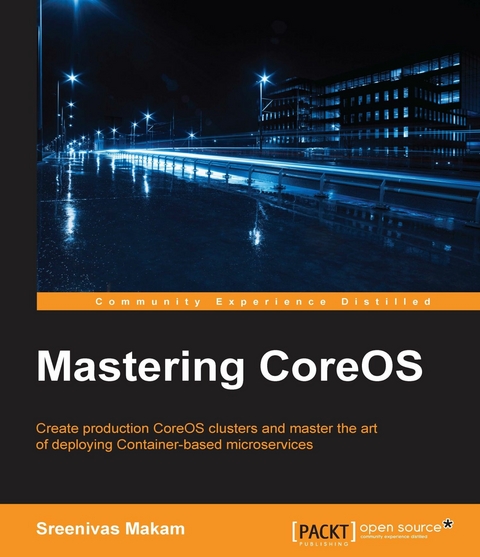
Mastering CoreOS (eBook)
382 Seiten
Packt Publishing (Verlag)
978-1-78528-830-2 (ISBN)
Create production CoreOS clusters and master the art of deploying Container-based microservices
About This Book
- Confidently deploy distributed applications and effectively manage distributed infrastructure using Containers and CoreOS
- Build secure, scalable CoreOS clusters to deploy distributed applications using open source technologies and industry best practices
- Every concept and technology in this book is illustrated with practical examples that can be used in both development and production environments.
Who This Book Is For
This book is intended for Cloud application developers and Cloud infrastructure administrators. If you are looking to deploy a CoreOS cluster or you already have a CoreOS cluster that you want to manage better in terms of performance, security, and scaling, then this book is perfect for you. To follow the hands-on stuff, you need to have a Google and an AWS Cloud account and be able to run CoreOS VMs on your machine. A basic understanding of public and private clouds, Containers, Docker, Linux, and CoreOS is required.
What You Will Learn
- Install CoreOS on a VM, on the Cloud, and bare metal, and find out how to keep your cluster secure and up to date
- Configure and troubleshoot key CoreOS services, such as etcd, systemd, and fleet, for distributed application deployment
- Study container networking using CoreOS Flannel and other solutions, such as Docker libnetwork, Weave, and Calico
- Explore the container filesystem and container volume management using Docker volume, NFS, GlusterFS, and Flocker
- Get to know the internals of container technologies such as Docker, Rkt, and Container orchestration using Openstack, Kubernetes and Docker native solutions
- Troubleshoot CoreOS cluster and Containers using monitoring and logging tools and master production techniques such as staging, security, and automation
In Detail
CoreOS makes Google and Amazon-style Cloud infrastructure available for anyone building their own private Cloud. This book covers the CoreOS internals and the technologies used in the deployment of container-based distributed applications. It starts with an overview of CoreOS and distributed application development while sharing knowledge on related technologies. Critical CoreOS services and networking and storage considerations for CoreOS are covered next.
In latter half of the book, you will learn about Container runtime systems such as Docker and Rkt and Container Orchestration using Kubernetes. You will also find out about the integration of popular orchestration solutions such as OpenStack, the AWS Container service, and the Google Container Engine with CoreOS and Docker. Lastly, we cover troubleshooting as well as production considerations.
Style and approach
This is an easy-to-follow, comprehensive guide that covers both basic and advanced concepts. All topics are illustrated with practical examples that can be used in both simulation and production environments.
Create production CoreOS clusters and master the art of deploying Container-based microservicesAbout This BookConfidently deploy distributed applications and effectively manage distributed infrastructure using Containers and CoreOSBuild secure, scalable CoreOS clusters to deploy distributed applications using open source technologies and industry best practicesEvery concept and technology in this book is illustrated with practical examples that can be used in both development and production environments.Who This Book Is ForThis book is intended for Cloud application developers and Cloud infrastructure administrators. If you are looking to deploy a CoreOS cluster or you already have a CoreOS cluster that you want to manage better in terms of performance, security, and scaling, then this book is perfect for you. To follow the hands-on stuff, you need to have a Google and an AWS Cloud account and be able to run CoreOS VMs on your machine. A basic understanding of public and private clouds, Containers, Docker, Linux, and CoreOS is required.What You Will LearnInstall CoreOS on a VM, on the Cloud, and bare metal, and find out how to keep your cluster secure and up to dateConfigure and troubleshoot key CoreOS services, such as etcd, systemd, and fleet, for distributed application deploymentStudy container networking using CoreOS Flannel and other solutions, such as Docker libnetwork, Weave, and CalicoExplore the container filesystem and container volume management using Docker volume, NFS, GlusterFS, and FlockerGet to know the internals of container technologies such as Docker, Rkt, and Container orchestration using Openstack, Kubernetes and Docker native solutionsTroubleshoot CoreOS cluster and Containers using monitoring and logging tools and master production techniques such as staging, security, and automationIn DetailCoreOS makes Google and Amazon-style Cloud infrastructure available for anyone building their own private Cloud. This book covers the CoreOS internals and the technologies used in the deployment of container-based distributed applications. It starts with an overview of CoreOS and distributed application development while sharing knowledge on related technologies. Critical CoreOS services and networking and storage considerations for CoreOS are covered next.In latter half of the book, you will learn about Container runtime systems such as Docker and Rkt and Container Orchestration using Kubernetes. You will also find out about the integration of popular orchestration solutions such as OpenStack, the AWS Container service, and the Google Container Engine with CoreOS and Docker. Lastly, we cover troubleshooting as well as production considerations.Style and approachThis is an easy-to-follow, comprehensive guide that covers both basic and advanced concepts. All topics are illustrated with practical examples that can be used in both simulation and production environments.
| Erscheint lt. Verlag | 26.2.2016 |
|---|---|
| Sprache | englisch |
| Themenwelt | Mathematik / Informatik ► Informatik |
| ISBN-10 | 1-78528-830-X / 178528830X |
| ISBN-13 | 978-1-78528-830-2 / 9781785288302 |
| Informationen gemäß Produktsicherheitsverordnung (GPSR) | |
| Haben Sie eine Frage zum Produkt? |
 EPUB (Adobe DRM)
Kopierschutz: Adobe-DRM
Adobe-DRM ist ein Kopierschutz, der das eBook vor Mißbrauch schützen soll. Dabei wird das eBook bereits beim Download auf Ihre persönliche Adobe-ID autorisiert. Lesen können Sie das eBook dann nur auf den Geräten, welche ebenfalls auf Ihre Adobe-ID registriert sind.
Details zum Adobe-DRM
Dateiformat: EPUB (Electronic Publication)
EPUB ist ein offener Standard für eBooks und eignet sich besonders zur Darstellung von Belletristik und Sachbüchern. Der Fließtext wird dynamisch an die Display- und Schriftgröße angepasst. Auch für mobile Lesegeräte ist EPUB daher gut geeignet.
Systemvoraussetzungen:
PC/Mac: Mit einem PC oder Mac können Sie dieses eBook lesen. Sie benötigen eine
eReader: Dieses eBook kann mit (fast) allen eBook-Readern gelesen werden. Mit dem amazon-Kindle ist es aber nicht kompatibel.
Smartphone/Tablet: Egal ob Apple oder Android, dieses eBook können Sie lesen. Sie benötigen eine
Geräteliste und zusätzliche Hinweise
Buying eBooks from abroad
For tax law reasons we can sell eBooks just within Germany and Switzerland. Regrettably we cannot fulfill eBook-orders from other countries.
aus dem Bereich