


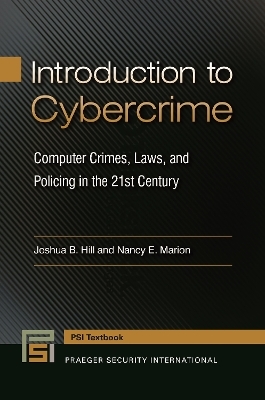
Introduction to Cybercrime
Computer Crimes, Laws, and Policing in the 21st Century
Seiten
2016
Praeger Publishers Inc (Verlag)
978-1-4408-3273-4 (ISBN)
Praeger Publishers Inc (Verlag)
978-1-4408-3273-4 (ISBN)
Explaining cybercrime in a highly networked world, this book provides a comprehensive yet accessible summary of the history, modern developments, and efforts to combat cybercrime in various forms at all levels of government-international, national, state, and local.
Explaining cybercrime in a highly networked world, this book provides a comprehensive yet accessible summary of the history, modern developments, and efforts to combat cybercrime in various forms at all levels of government—international, national, state, and local.
As the exponential growth of the Internet has made the exchange and storage of information quick and inexpensive, the incidence of cyber-enabled criminal activity—from copyright infringement to phishing to online pornography—has also exploded. These crimes, both old and new, are posing challenges for law enforcement and legislators alike. What efforts—if any—could deter cybercrime in the highly networked and extremely fast-moving modern world? Introduction to Cybercrime: Computer Crimes, Laws, and Policing in the 21st Century seeks to address this tough question and enables readers to better contextualize the place of cybercrime in the current landscape.
This textbook documents how a significant side effect of the positive growth of technology has been a proliferation of computer-facilitated crime, explaining how computers have become the preferred tools used to commit crimes, both domestically and internationally, and have the potential to seriously harm people and property alike. The chapters discuss different types of cybercrimes—including new offenses unique to the Internet—and their widespread impacts. Readers will learn about the governmental responses worldwide that attempt to alleviate or prevent cybercrimes and gain a solid understanding of the issues surrounding cybercrime in today's society as well as the long- and short-term impacts of cybercrime.
Explaining cybercrime in a highly networked world, this book provides a comprehensive yet accessible summary of the history, modern developments, and efforts to combat cybercrime in various forms at all levels of government—international, national, state, and local.
As the exponential growth of the Internet has made the exchange and storage of information quick and inexpensive, the incidence of cyber-enabled criminal activity—from copyright infringement to phishing to online pornography—has also exploded. These crimes, both old and new, are posing challenges for law enforcement and legislators alike. What efforts—if any—could deter cybercrime in the highly networked and extremely fast-moving modern world? Introduction to Cybercrime: Computer Crimes, Laws, and Policing in the 21st Century seeks to address this tough question and enables readers to better contextualize the place of cybercrime in the current landscape.
This textbook documents how a significant side effect of the positive growth of technology has been a proliferation of computer-facilitated crime, explaining how computers have become the preferred tools used to commit crimes, both domestically and internationally, and have the potential to seriously harm people and property alike. The chapters discuss different types of cybercrimes—including new offenses unique to the Internet—and their widespread impacts. Readers will learn about the governmental responses worldwide that attempt to alleviate or prevent cybercrimes and gain a solid understanding of the issues surrounding cybercrime in today's society as well as the long- and short-term impacts of cybercrime.
Nancy E. Marion, PhD, is professor of political science at the University of Akron. Joshua B. Hill, PhD, is assistant professor of criminal justice and security studies at the University of Southern Mississippi.
Chapter One Introduction
Chapter Two History of Cybercrime
Chapter Three Types and Frequency of Cybercrime
Chapter Four Amount of Cybercrime
Chapter Five Law Enforcement
Chapter Six Organized Cybercrime
Chapter Seven Cyberterrorism and Terrorists Online
Chapter Eight Cyberwar
Chapter Nine Domestic Response
Chapter Ten International Response
Chapter Eleven Conclusion
Appendix: Timeline of Significant Events
Selected Bibliography
Index
| Erscheint lt. Verlag | 22.2.2016 |
|---|---|
| Reihe/Serie | Praeger Security International Textbook |
| Sprache | englisch |
| Maße | 156 x 238 mm |
| Gewicht | 600 g |
| Themenwelt | Informatik ► Netzwerke ► Sicherheit / Firewall |
| Recht / Steuern ► Strafrecht ► Kriminologie | |
| ISBN-10 | 1-4408-3273-0 / 1440832730 |
| ISBN-13 | 978-1-4408-3273-4 / 9781440832734 |
| Zustand | Neuware |
| Informationen gemäß Produktsicherheitsverordnung (GPSR) | |
| Haben Sie eine Frage zum Produkt? |
Mehr entdecken
aus dem Bereich


aus dem Bereich
Das Lehrbuch für Konzepte, Prinzipien, Mechanismen, Architekturen und …
Buch | Softcover (2022)
Springer Vieweg (Verlag)
CHF 53,15
Lehrbuch für Prüfung und Praxis
Buch | Softcover (2023)
Springer Fachmedien Wiesbaden GmbH (Verlag)
CHF 27,95
Management der Informationssicherheit und Vorbereitung auf die …
Buch (2024)
Carl Hanser (Verlag)
CHF 97,95


