Scripting with Objects (eBook)
John Wiley & Sons (Verlag)
978-0-470-25578-0 (ISBN)
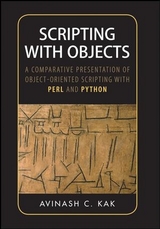
Scripting languages are becoming increasingly important for software development. These higher-level languages, with their built-in easy-to-use data structures are convenient for programmers to use as 'glue' languages for assembling multi-language applications and for quick prototyping of software architectures. Scripting languages are also used extensively in Web-based applications. Based on the same overall philosophy that made Programming with Objects such a wide success, Scripting with Objects takes a novel dual-language approach to learning advanced scripting with Perl and Python, the dominant languages of the genre. This method of comparing basic syntax and writing application-level scripts is designed to give readers a more comprehensive and expansive perspective on the subject.
Beginning with an overview of the importance of scripting languages—and how they differ from mainstream systems programming languages—the book explores:
Regular expressions for string processing
The notion of a class in Perl and Python
Inheritance and polymorphism in Perl and Python
Handling exceptions
Abstract classes and methods in Perl and Python
Weak references for memory management
Scripting for graphical user interfaces
Multithreaded scripting
Scripting for network programming
Interacting with databases
Processing XML with Perl and Python
This book serves as an excellent textbook for a one-semester undergraduate course on advanced scripting in which the students have some prior experience using Perl and Python, or for a two-semester course for students who will be experiencing scripting for the first time. Scripting with Objects is also an ideal resource for industry professionals who are making the transition from Perl to Python, or vice versa.
Avinash C. Kak is a Professor of Electrical and Computer Engineering at Purdue University. His previous Wiley book, Programming with Objects: A Comparative Presentation of Object-Oriented Programming with C++ and Java, is used by a number of institutions for teaching advanced programming.
Object-Oriented scripting with Perl and Python Scripting languages are becoming increasingly important for software development. These higher-level languages, with their built-in easy-to-use data structures are convenient for programmers to use as "e;glue"e; languages for assembling multi-language applications and for quick prototyping of software architectures. Scripting languages are also used extensively in Web-based applications. Based on the same overall philosophy that made Programming with Objects such a wide success, Scripting with Objects takes a novel dual-language approach to learning advanced scripting with Perl and Python, the dominant languages of the genre. This method of comparing basic syntax and writing application-level scripts is designed to give readers a more comprehensive and expansive perspective on the subject. Beginning with an overview of the importance of scripting languages and how they differ from mainstream systems programming languages the book explores: Regular expressions for string processing The notion of a class in Perl and Python Inheritance and polymorphism in Perl and Python Handling exceptions Abstract classes and methods in Perl and Python Weak references for memory management Scripting for graphical user interfaces Multithreaded scripting Scripting for network programming Interacting with databases Processing XML with Perl and Python This book serves as an excellent textbook for a one-semester undergraduate course on advanced scripting in which the students have some prior experience using Perl and Python, or for a two-semester course for students who will be experiencing scripting for the first time. Scripting with Objects is also an ideal resource for industry professionals who are making the transition from Perl to Python, or vice versa.
Avinash C. Kak is a Professor of Electrical and Computer Engineering at Purdue University. His previous Wiley book, Programming with Objects: A Comparative Presentation of Object-Oriented Programming with C++ and Java, is used by a number of institutions for teaching advanced programming.
1. Multilanguage View of Application Development and OO Scripting.
2. Perl - A Review of the Basics.
3. Python - A Review of the Basics.
4. Regular Expressions for String Processing.
5. References in Perl.
6. The Notion of a Class in Perl.
7. The Notion of a Class in Python.
8. Inheritance and Polymorphism in Perl.
9. Inheritance and Polymorphism in Python.
10. Handling Exceptions.
11. Abstract Classes and Methods.
12. Weak References for Memory Management.
13. Scripting for Graphical User Interfaces.
14. Multithreaded Scripting.
15. Scripting for Network Programming.
16. Interacting with Databases.
17. Processing XML with Perl and Python.
References.
Index.
| Erscheint lt. Verlag | 16.7.2012 |
|---|---|
| Sprache | englisch |
| Themenwelt | Informatik ► Programmiersprachen / -werkzeuge ► C / C++ |
| Informatik ► Software Entwicklung ► Objektorientierung | |
| Schlagworte | Applications • BUILTIN • Computer Science • Convenient • data structures • easytouse • higherlevel • important • Increasingly • Informatik • Java • Languages • multilanguage • objectoriented • Object Technologies - Java • Objektorientiertes Programmieren / Java • Perl • programmers • Programmierung / C u. C++ • Programming / C & C++ • quick prototyping • Scripting • Software • webbased |
| ISBN-10 | 0-470-25578-1 / 0470255781 |
| ISBN-13 | 978-0-470-25578-0 / 9780470255780 |
| Informationen gemäß Produktsicherheitsverordnung (GPSR) | |
| Haben Sie eine Frage zum Produkt? |
 PDF (Adobe DRM)
Kopierschutz: Adobe-DRM
Adobe-DRM ist ein Kopierschutz, der das eBook vor Mißbrauch schützen soll. Dabei wird das eBook bereits beim Download auf Ihre persönliche Adobe-ID autorisiert. Lesen können Sie das eBook dann nur auf den Geräten, welche ebenfalls auf Ihre Adobe-ID registriert sind.
Details zum Adobe-DRM
Dateiformat: PDF (Portable Document Format)
Mit einem festen Seitenlayout eignet sich die PDF besonders für Fachbücher mit Spalten, Tabellen und Abbildungen. Eine PDF kann auf fast allen Geräten angezeigt werden, ist aber für kleine Displays (Smartphone, eReader) nur eingeschränkt geeignet.
Systemvoraussetzungen:
PC/Mac: Mit einem PC oder Mac können Sie dieses eBook lesen. Sie benötigen eine
eReader: Dieses eBook kann mit (fast) allen eBook-Readern gelesen werden. Mit dem amazon-Kindle ist es aber nicht kompatibel.
Smartphone/Tablet: Egal ob Apple oder Android, dieses eBook können Sie lesen. Sie benötigen eine
Geräteliste und zusätzliche Hinweise
Buying eBooks from abroad
For tax law reasons we can sell eBooks just within Germany and Switzerland. Regrettably we cannot fulfill eBook-orders from other countries.
aus dem Bereich