Letters Home (eBook)
136 Seiten
Bookbaby (Verlag)
979-8-3178-1514-1 (ISBN)
Terry, a cousin of Torstein, shares the same rich ancestral heritage. Now retired and living in Florida, Terry first read the original Norwegian edition of Brev Heim and was deeply moved by the story. Recognizing its value for Norwegian-American families, he and Torstein decided to bring the book to a broader audience by translating it into English, so the voices of their ancestors could be heard across generations and across the ocean.
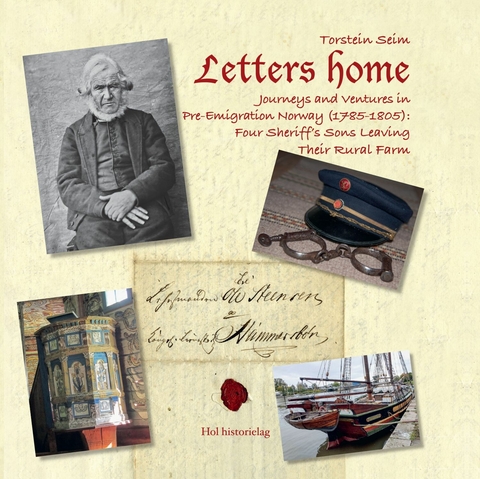
Before Ellis Island... before the great waves of Norwegian emigration to America... There were the letters. Letters Home (Brev Heim) now available in English for the first time is a beautifully illustrated, lovingly translated testament to family, perseverance, and the enduring power of connection. These voices from the late 1700s speak clearly today, reminding us not only of where we come from but how far we've traveled. A Journey Not Across the Ocean, But Across a Nation and more. In the remote mountain village of Hol, at the northern tip of Norway's Hallingdal Valley, thirteen handwritten letters have survived more than two centuries. Written between 1785 and 1805 by three young brothers Svend, Webj rn, and Ole these letters traveled across fjords and mountain passes to reach their father back home. They were carefully preserved on the family farms of vremyro and Hamarsb en, handed down across generations. Before ships to America, there were skis and footpaths across the Hardangervidda plateau. Before Ellis Island, there was the struggle to survive in a Norway ruled by Denmark, where opportunity had to be earned far from home. The Brothers' LivesWebj rn became a renowned rosemaler, decorating churches and homes with vibrant folk art that is still visible today. Although he died young from leprosy, his legacy lives on in the beauty of his work, preserved in paint and wood. Ole settled in Bergen, serving a respected household and writing home with warmth, gratitude, and longing. Svend became a trader and shipowner, expanding his business along the coast and into the Mediterranean until British warships destroyed several of his vessels during the Napoleonic Wars. Helge, whose letters are lost, found wealth and land in Kongsberg, the silver-mining town. His story, too, is woven into the family's greater arc. Not Just History. A Human Story. These letters are not dry records. They are filled with:HumorHardshipAdviceLoveFaithAnd the longing that defines all migration, whether across a mountain or across an ocean. Compiled and annotated by Torstein Seim, a direct descendant of the brothers' family and a sheriff who still lives on the ancestral farm in Hol Letters Home is a powerful window into the Norwegian experience before emigration. If you have Norwegian roots, this is not just history it may be your story. Order the beautifully printed hardcover edition a keepsake for families and a perfect gift for anyone interested in heritage, art, and history. Prefer digital? The ebook is available for immediate download worldwide.
CHAPTER 2. THE HAMARSBØEN FARM
Ole Steensen Hamarsbøen, the Father.
Born in 1725, Ole Steensen Hamarsbøen had a small build, but his vigor and determination were unmatched.
In his youth, Ole served as a traveling schoolteacher in Hol after the school was established in 1742. This role reflected his commitment to education and community service.
A note from Øvremyro details one of Ole’s remarkable feats: “Ole Hammersbøen was the first to set up a mill in “Ustedalselven” Ustedal River. When he was to buy this mill, he skied the 50 kilometers from Hammersbøen to Borgund in one day. He brought the millstones over Filefjeld mountain to Valdres Valley and up through Hallingdal. He built a water sawmill in Ustedalselven around 1781 - before that, planks and boards were split with axes and wedges.”
In his younger years, Ole engaged in trading. In 1750, he testified about a deal with Torstein Jeilo to deliver 49 rolls of English tobacco, likely purchased at the Lærdal village market eight days after Michael’s mass.
Ole Steensen was first mentioned as the sheriff in Hol in 1761 during an appraisal at Eggeslaatten in Hovet.
Ole married Aagot Raunsgard, born in 1717, who was eight years his senior. Aagot passed away in 1797 and was considered “challenging to live with.” Ole had several siblings, each with unique paths:
-
– Guttorm, a horse trader, drowned in Nordfjord.
-
– Knut, a tailor, died in Jæren, south of Stavanger.
-
– Tollef, who inherited a fishing lake in Skurdalen, froze to death while hunting reindeer on the Hardangervidda plateau in 1787.
-
– Helge, the eldest brother, took over the Søre Foss farm in Hol in 1745 and built a loft house that still stands today.
-
– Birgit, born in 1735, married Vebjørn Halvorgard, who kept a diary with excerpts reproduced in Holsboka (the Hol village history book by Reinton).
Ole Steensen took over the lease of the Hamarsbøen farm from his father in 1748. He received the lease certificate from Abel Maria Friis, the widow of the priest Stockfleth. The lease was valued at one hide to Hol Church and one to the parsonage in Ål.
Historically, the farm Hamarsbøen was a church property. See chapter 1.
The Loft House with a jail at Hamarsbøen.
Sheriff Ole Steensen documented the completion of a significant building on June 30, 1778. He noted, “Anno 1778, June 30th, I completed my southern building, and when the mentioned building was finished with interior and exterior surface treatment, it had cost me over 140 riksdaler. Ole Hammersbøen.” This entry highlights the substantial investment Ole made in enhancing the farm’s infrastructure.
The loft house at Hamarsbøen, described in the magazine “Nu” from January 31, 1905, stands as a testament to the architectural and historical heritage of the region. The article details the house’s venerable status:
“The old venerable loft house with two floors was built around 1770. Its stylish age and saga style are preserved. Over windows and on the shop and doors are long inscriptions, owners’ names, verses, Bible passages, and proverbs. At the upper end of the building is an old jail cell with strong, homemade iron bars, which is still used as a jail.”
The structure was originally a single, square room, believed to be a smokehouse, dating back to the 14-1500s. As smokehouses became obsolete in Hallingdal, this original building was incorporated into the larger loft house constructed around 1770. The preservation of inscriptions and the incorporation of Biblical passages and proverbs reflect the cultural and religious values of the era.
One of the loft house’s unique features is the old jail cell with robust, homemade iron bars. This cell has historical significance, as it is believed that the Villand fighters and Medhus men were detained here before being sent to the fortress prison in Christiania. This aspect of the building underscores its multifunctional use and its role in maintaining law and order in the region.
The jail is located at Øvremyro in Hol. Solid iron bars on the windows.
Nevertheless, it was said that the detainee was just as drunk in the morning.
His drinking buddies had drilled a hole in the wall and poured in liquor.
Photo: J.R.Wick
The loft house at Hamarsbøen, with its rich history and architectural significance, serves as a window into the past. From its origins as a smokehouse to its evolution into a multifaceted building with a jail cell, it encapsulates the cultural, social, and historical narrative of Hallingdal.
The First to Grow Potatoes in Hol.
Sheriff Ole Steensen at Hamarsbøen holds the distinction of being the first to grow potatoes in Hol. The Hol village history book notes that Ole received his first batch of potatoes from Hjeltnes in Hardanger, one of the earliest regions in Norway to cultivate this crop.
A note at Øvremyro highlights that Ole “received potatoes shipped from Kristoffer Kjellenæs in Ulvik (in Hardanger) and was the first to grow potatoes in Hol.” This act positioned him as a pioneer in the agricultural landscape of Hol
The broader history of potatoes in Norway began in 1758 in Ullensvang, Hardanger. Peder Harboe Hertzberg, in his book “Information for Farmers in Norway on the Very Useful Root Fruit Potatoes: How to Plant and Use Them,” mentions that Provost Atke brought and planted potatoes in his garden at Ullensvang Parsonage. Hertzberg received a hat of potatoes from Provost Atke in Kinsarvik, who had initially planted them as a garden rarity.
Priests’ role in promoting potato cultivation earned them the nickname “potato priests.” Their efforts were crucial in incorporating potatoes into the Norwegian diet.
Hans Nielsen Hauge is recognized for his religious and social contributions. However, he also promoted agricultural innovations, including cultivating potatoes. The introduction of potatoes to Norway is often credited to the efforts of early agricultural reformers and influential figures like Hauge, who recognized the crop’s potential to improve food security and nutrition. He would reward farmers who come to his gatherings with potatoes. Hauge and his followers advocated cultivating potatoes as part of their broader efforts to improve agricultural productivity and self-sufficiency. The crop’s ability to thrive in various soil types and its high nutritional value made it a valuable addition to Norwegian farms. Hauge’s advocacy for potato cultivation contributed to the crop’s wider acceptance and integration into Norwegian agriculture. His efforts helped ensure that potatoes became a vital component of the Norwegian diet, providing a reliable food source that complemented traditional grains and vegetables. Hans Nielsen Hauge’s legacy encompasses his role as a religious leader, social reformer, business entrepreneur, and promoter of agricultural innovations.
Potatoes likely saved many lives in the following years, especially when grain harvests failed, and famine was widespread—the Napoleonic Wars and subsequent blockades of Norwegian ports further complicated grain imports.
In 1778, Ole Hamarsbøen was awarded a prize by the Danish Agricultural Society for being the first to grow potatoes in Hol. According to the Holsboka (The Village Book of Hol, by Reinton), he received eight riksdalers for producing 20 barrels of potatoes.
At first, the villagers found this new crop strange and mocked Ole and his family. They called them “kanteføllaget,” reflecting their skepticism and resistance to this novelty. People feared potatoes were poisonous, a belief likely stemming from improper storage that caused the potatoes to sprout.
The Sheriff’s chair of “Steen Steensen Øvremyhre 1872 in the living room on the farm was also used for court cases. Photo: J.R. Wick.
Over time, villagers learned to store potatoes in dark and cool conditions, which helped preserve them through the winter. This new understanding turned the potato into a lifesaver during the “bark bread era,” marked by war, poor harvests, and food shortages.
Despite initial resistance, Ole Steensen’s efforts to introduce and cultivate potatoes in Hol proved to be a crucial innovation. This humble root vegetable became essential for survival during challenging times, cementing its place in the region’s agricultural history.
Talented and appointed Sheriff at only 26. Fighting violent troublemakers.
When Ole Steensen Hamarsbøen became sheriff at 26, he faced significant challenges. The village was plagued by violent troublemakers who often terrorized the locals. Festive gatherings, fueled by beer and spirits, frequently ended in knife fights, fatalities, and murders.
Ole’s father, Sten Olsen, was described as “small in stature but well-built. In his youth, he often dared to fight with giants and often won, but more due to his cunning rather than his strength.” This note highlights the environment of honor and bravado prevalent in the villages, where knife fights were common at weddings, christenings, and funerals.
The Hallingdal people had earned a reputation for being quick to draw...
| Erscheint lt. Verlag | 12.8.2025 |
|---|---|
| Sprache | englisch |
| Themenwelt | Geisteswissenschaften ► Geschichte ► Regional- / Ländergeschichte |
| ISBN-13 | 979-8-3178-1514-1 / 9798317815141 |
| Informationen gemäß Produktsicherheitsverordnung (GPSR) | |
| Haben Sie eine Frage zum Produkt? |
 EPUB (Ohne DRM)
Größe: 26,1 MB
Digital Rights Management: ohne DRM
Dieses eBook enthält kein DRM oder Kopierschutz. Eine Weitergabe an Dritte ist jedoch rechtlich nicht zulässig, weil Sie beim Kauf nur die Rechte an der persönlichen Nutzung erwerben.
Dateiformat: EPUB (Electronic Publication)
EPUB ist ein offener Standard für eBooks und eignet sich besonders zur Darstellung von Belletristik und Sachbüchern. Der Fließtext wird dynamisch an die Display- und Schriftgröße angepasst. Auch für mobile Lesegeräte ist EPUB daher gut geeignet.
Systemvoraussetzungen:
PC/Mac: Mit einem PC oder Mac können Sie dieses eBook lesen. Sie benötigen dafür die kostenlose Software Adobe Digital Editions.
eReader: Dieses eBook kann mit (fast) allen eBook-Readern gelesen werden. Mit dem amazon-Kindle ist es aber nicht kompatibel.
Smartphone/Tablet: Egal ob Apple oder Android, dieses eBook können Sie lesen. Sie benötigen dafür eine kostenlose App.
Geräteliste und zusätzliche Hinweise
Buying eBooks from abroad
For tax law reasons we can sell eBooks just within Germany and Switzerland. Regrettably we cannot fulfill eBook-orders from other countries.
aus dem Bereich