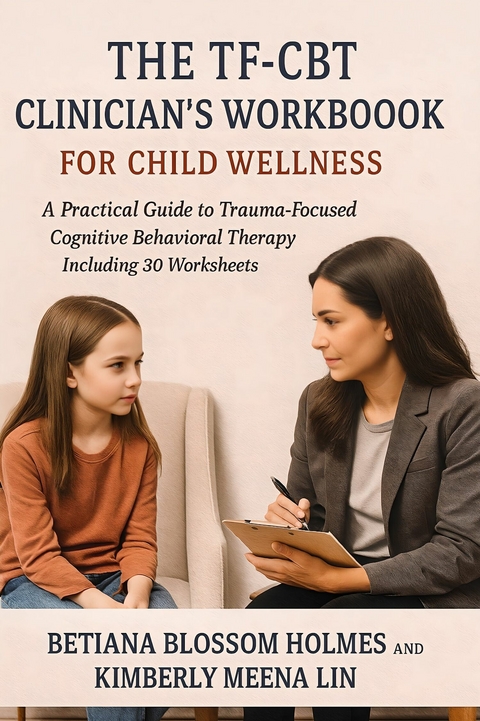
The TF-CBT Clinician's Workbook for Child Wellness (eBook)
124 Seiten
TherapyBooks Publishing (Verlag)
978-0-00-073598-0 (ISBN)
This comprehensive workbook is designed to support mental health professionals, educators, and caregivers who serve children dealing with the aftereffects of trauma. Drawing upon the proven framework of Trauma-Focused Cognitive Behavioral Therapy (TF-CBT), it provides step-by-step guidance on stabilizing emotions, challenging negative beliefs, and helping young clients reclaim a sense of safety.
Inside, you will find:
30 Practical Worksheets tailored to core TF-CBT components, from emotional regulation and thought restructuring to trauma narration and caregiver involvement.
Phase-by-Phase Guidance that walks you through each stage of child-centered trauma therapy, offering practical methods for promoting resilience and healthy coping strategies.
Family Engagement Techniques designed to rebuild trust and communication at home, ensuring a supportive environment that reinforces therapeutic gains.
Flexible Applications suitable for clinicians, counselors, and trained educators seeking to adapt TF-CBT principles for individual or group work.
Written in an accessible tone, this resource combines scientific insights with real-world examples that simplify the healing process for both professionals and children. It supports sessions focused on safety, skill-building, trauma processing, and long-term resilience.
Chapter 3: Adapting TF-CBT for Different Populations
Alright, folks, let's get down to brass tacks. We've covered the basics of TF-CBT and how it works, but let's face it - no two clients are exactly alike. Kids come in all shapes, sizes, and backgrounds, and what works for one might not work for another. That's where the art of adaptation comes in.
As therapists, it's your job to take the core principles of TF-CBT and make them work for each unique child and family that walks through our door. We can't just stick to a rigid, one-size-fits-all approach and expect miracles. We have to be flexible, creative, and culturally attuned to meet our clients where they're at.
So, how do we do that? Let's break it down by age group and culture, shall we?
Special Considerations for Children
When it comes to adapting TF-CBT for children, the key is to make it developmentally appropriate. That means taking into account their cognitive, emotional, and language abilities and tailoring our approach accordingly.
For younger kids (ages 3-7), we might rely more heavily on play, art, and storytelling to help them process their trauma. We might use puppets, dolls, or sand trays to help them express their feelings and experiences in a non-threatening way. We might read them storybooks about other kids who have gone through similar situations and come out the other side.
Here's an example: Let's say we're working with a 5-year-old girl named Lily who witnessed domestic violence between her parents. We might start by having her draw a picture of her family and label each person with an emotion (e.g., "Mommy is sad," "Daddy is angry"). Then we might have her act out a scene with puppets where the mommy and daddy puppets apologize to each other and make up. We might end by reading her a story about a brave little girl who learns to feel safe and happy again after a scary thing happened.
For older kids (ages 8-12), we can start to incorporate more cognitive-behavioral techniques, like thought challenging and problem-solving. We can help them identify and reframe negative self-talk, like "It's all my fault" or "I'm not good enough." We can teach them coping skills, like deep breathing or positive self-talk, to help them manage their anxiety and stress.
Here's another example: Let's say we're working with a 10-year-old boy named Jayden who was sexually abused by a babysitter. We might start by having him write a letter to his "future self" about how he wants to feel and what he wants to accomplish in life. Then we might have him create a "coping card" with positive affirmations and reminders of his strengths, like "I am brave" or "I am not alone." We might role-play different scenarios where he practices assertiveness and boundary-setting skills.
The key is to make it engaging, interactive, and empowering for the child. We want to help them feel like they have some control over their healing process and that they're not just passive recipients of treatment.
Special Considerations for Adolescents
When it comes to adapting TF-CBT for adolescents, we have to take into account their unique developmental needs and challenges. Teens are going through a lot of changes - physically, emotionally, and socially - and they're trying to figure out who they are and where they fit in the world.
One of the biggest challenges with teens is getting them to buy into treatment. They might be resistant, skeptical, or downright hostile towards the idea of therapy. They might feel like they don't need help or that talking about their problems is a sign of weakness.
That's where we have to get creative and meet them where they're at. We might start by building rapport and finding common ground, like talking about their interests, hobbies, or future goals. We might use humor, sarcasm, or even a little irreverence to show that we're not just another stuffy adult trying to tell them what to do.
We also have to be mindful of their need for autonomy and independence. We can't just lecture them or give them advice - we have to help them come to their own conclusions and make their own decisions. We might use Socratic questioning to guide them towards insight, like "What do you think would happen if you did X?" or "How does that fit with your values and goals?"
Here's an example: Let's say we're working with a 16-year-old girl named Kayla who was date raped at a party. We might start by validating her anger and sense of betrayal, saying something like "Yeah, that really sucks. I'd be pissed off too if someone did that to me." Then we might explore her thoughts and beliefs about the event, like "What do you think that says about you?" or "How do you think that will affect your future relationships?" We might help her challenge any self-blame or shame, like "Do you think it's ever okay for someone to force you to do something you don't want to do, no matter what you were wearing or how much you had to drink?" We might end by brainstorming ways she can assert her boundaries and protect herself in the future, like having a buddy system at parties or carrying pepper spray.
The key is to be authentic, non-judgmental, and collaborative in our approach. We want to help teens feel heard, respected, and empowered to take control of their lives.
Special Considerations for Adults
Now, I know what you might be thinking - "But wait, I thought TF-CBT was for kids and teens!" And you're right, it was originally developed for that population. But here's the thing - trauma doesn't discriminate based on age. Adults can experience traumatic events too, and they deserve effective treatment just as much as kids do.
The good news is that TF-CBT can absolutely be adapted for adults with a few tweaks and considerations. For one thing, adults have a longer history and more complex set of experiences to draw from. They might have multiple traumas, co-occurring disorders, or ingrained patterns of thinking and behaving that are harder to change.
That means we have to do a more thorough assessment and case conceptualization upfront. We have to get a sense of their full life story, not just the presenting trauma. We have to explore how their family of origin, cultural background, and personal values shape their worldview and coping strategies.
We also have to be mindful of any power dynamics or transference issues that might come up in the therapeutic relationship. Adults might see us as an authority figure, a parental figure, or even a potential romantic partner (yikes!). We have to maintain clear boundaries and roles while still being warm and empathetic.
Here's an example: Let's say we're working with a 35-year-old man named Mark who was physically and emotionally abused by his father growing up. He's struggled with anger issues and intimacy problems in his adult relationships. We might start by exploring his early attachment experiences and how they've influenced his current patterns. We might help him identify and challenge any distorted beliefs, like "I'm unlovable" or "I have to be in control all the time." We might teach him emotional regulation skills, like mindfulness or assertive communication, to help him navigate conflicts with his partner. We might even do some conjoint sessions with his partner to work on building trust and intimacy.
The key is to be holistic, collaborative, and strengths-based in our approach. We want to help adults see that they're not defined by their trauma and that they have the resilience and resources to heal and thrive.
Cultural Adaptations
Now, let's talk about the elephant in the room - culture. We live in a diverse, multicultural society, and our clients come from all sorts of backgrounds and identities. As therapists, we can't just assume that what works for one group will work for another. We have to be culturally sensitive, humble, and responsive in our approach.
That means doing our homework and learning about different cultural norms, values, and practices. It means being aware of our own biases and assumptions and how they might impact the therapeutic relationship. It means adapting our language, metaphors, and interventions to be more culturally relevant and resonant.
Here are some examples of cultural adaptations we might make:
- For African American clients, we might incorporate spirituality, storytelling, and collective healing practices into our work. We might address issues of racism, discrimination, and historical trauma and how they intersect with personal trauma.
- For Latino clients, we might involve extended family members in treatment and use a more directive, problem-solving approach. We might explore cultural values around gender roles, respect for authority, and emotional expression.
- For Asian American clients, we might focus more on somatic symptoms and use a more indirect, metaphorical communication style. We might address issues of shame, perfectionism, and intergenerational conflict.
- For Native American clients, we might incorporate traditional healing practices, like smudging or talking circles, and use nature-based metaphors. We might explore issues of historical trauma, cultural identity, and spiritual disconnection.
- For LGBTQ+ clients, we might address issues of minority stress, internalized homophobia/transphobia, and coming out. We might use affirmative, non-binary language and challenge any heteronormative assumptions.
The key is to be curious, open-minded, and willing to learn from our clients. We want to honor their unique identities and experiences while still providing evidence-based, trauma-focused treatment.
Conclusion
Whew, that was a lot to cover! But I hope you're starting to see just...
| Erscheint lt. Verlag | 5.3.2025 |
|---|---|
| Sprache | englisch |
| Themenwelt | Geisteswissenschaften |
| ISBN-10 | 0-00-073598-1 / 0000735981 |
| ISBN-13 | 978-0-00-073598-0 / 9780000735980 |
| Informationen gemäß Produktsicherheitsverordnung (GPSR) | |
| Haben Sie eine Frage zum Produkt? |
 EPUB (Adobe DRM)
Größe: 1,4 MB
Kopierschutz: Adobe-DRM
Adobe-DRM ist ein Kopierschutz, der das eBook vor Mißbrauch schützen soll. Dabei wird das eBook bereits beim Download auf Ihre persönliche Adobe-ID autorisiert. Lesen können Sie das eBook dann nur auf den Geräten, welche ebenfalls auf Ihre Adobe-ID registriert sind.
Details zum Adobe-DRM
Dateiformat: EPUB (Electronic Publication)
EPUB ist ein offener Standard für eBooks und eignet sich besonders zur Darstellung von Belletristik und Sachbüchern. Der Fließtext wird dynamisch an die Display- und Schriftgröße angepasst. Auch für mobile Lesegeräte ist EPUB daher gut geeignet.
Systemvoraussetzungen:
PC/Mac: Mit einem PC oder Mac können Sie dieses eBook lesen. Sie benötigen eine
eReader: Dieses eBook kann mit (fast) allen eBook-Readern gelesen werden. Mit dem amazon-Kindle ist es aber nicht kompatibel.
Smartphone/Tablet: Egal ob Apple oder Android, dieses eBook können Sie lesen. Sie benötigen eine
Geräteliste und zusätzliche Hinweise
Buying eBooks from abroad
For tax law reasons we can sell eBooks just within Germany and Switzerland. Regrettably we cannot fulfill eBook-orders from other countries.
aus dem Bereich