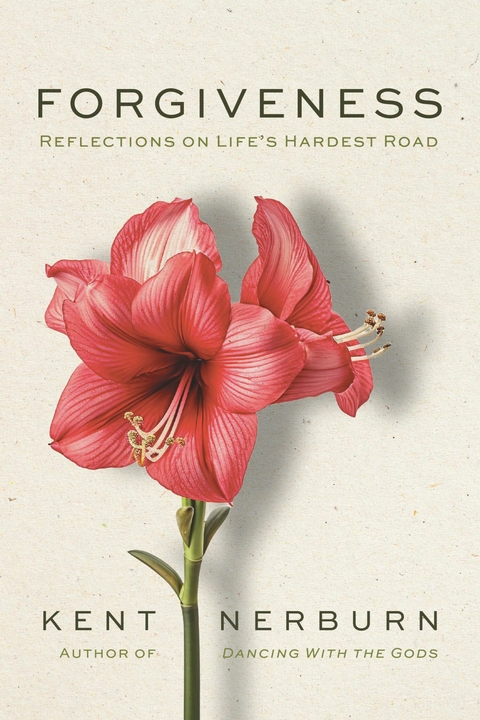
Forgiveness (eBook)
112 Seiten
Wellspring (Verlag)
978-1-63582-576-3 (ISBN)
Kent Nerburn received his Ph.D. in religion and art from the Graduate Theological Union in conjunction with the University of California at Berkeley. Formerly a sculptor of religious art, with sculptures in such places as Westminster Benedictine Abbey in Mission, British Columbia, and the Peace Museum in Hiroshima, Japan, he now devotes himself to crafting books. He is the award-winning author of Simple Truths, Small Graces, Letters to My Son, Neither Wolf nor Dog, Make Me an Instrument of Your Peace, and Lone Dog Road. He is also the editor of numerous books of Native American thought and wisdom. He lives with his family in St. Paul, Minnesota. To learn more, visit www.kentnerburn.com.
What do we tell our children about forgiveness? There is a dilemma that faces us all when we walk the complex and difficult path of life. Everywhere we look, the world seems awash in unspeakable cruelties. The list is endless, and, with every revelation, the caring heart breaks a little more. What are we to do? How do we deal with cruelty and evil in this world when we are taught to turn the other cheek and to forgive not seven times, but seventy times seven? How do we acknowledge the darkness of life without becoming ensnared in it? This is not a how-to book of spiritual advancement, or a book of easy answers to hard questions. Forgiveness is the journey of an ordinary man through the ordinary landscape of everyday life, trying to understand how the elusive angels of compassion and understanding can stand strong against the demons of cruelty, anger, and injustice. There is no easy answer. Each of us must find a way to respond to the darkness in the world. How we shape forgiveness is one of the most crucial questions in our lives. Let us make this journey toward forgiveness together. From the greatest pain and sorrow, a great forgiveness grows.
Introduction
The Little Yellow Dog
Recently I received a letter from my old friend John, with whom I had not corresponded in some time. He is several years younger than I, and perhaps for that reason has always looked to me for advice when his life has taken a confusing turn.
Years ago, we had agreed upon the delightful but somewhat antiquated practice of communicating by letter. It has an old-fashioned intimacy and forces us to think through our thoughts. When I saw his name on the envelope I knew something significant had to be on his mind. It turned out he had decided to write to me because of a disquieting event that had occurred several days earlier.
He, like me, is a father. And he, like me, struggles to raise his children to serve the common good, rather than simply to promote their own self-interest and personal accomplishments. It is a difficult challenge, but one in which we both believe.
The event that had prompted him to write was not one of great significance in the world, but it had touched him deeply.
He and his young daughter had been walking down an alley near their home on the way to the store, when they had come upon a little yellow dog, badly undernourished, chained to a fence on a leash no more than two feet long. The dirt under the dog’s feet was worn into a bowl; the dog itself was wide-eyed, frantic, and hysterical. Nearby, a water and food dish were tipped over. They were covered with dust, and obviously had not been filled for several days.
John looked up at the house. It was ill-kept, with a broken screen door. Music was blaring from inside, and there were motorcycles parked among piles of beer cans and trash on the expanse of dirt and weeds that had once been a lawn.
Cautiously, he and his daughter approached the dog. It was still friendly, even desperately so. They looked in the dog’s eyes; the dog looked back at them with terror and yearning. They petted the dog and hugged it. The dog pulled at its leash and wagged its tail frantically.
“Suddenly, we both began crying,” he wrote. “That little dog was pushing against us like we were his only hope in the world. We just sat there hugging it and crying while the little dog shivered in our arms.”
John thought of approaching the house and confronting the owners, but he was afraid.
He thought of stealing the dog, but was concerned that if he got caught the dog’s owners might harm him or his daughter.
Besides, he thought, even if he were successful, these people would just get another dog and abuse it the same way.
His daughter looked at him, her eyes tear-stained and hopeful. “What can we do, Dad?” she asked him. “We can’t just leave this little dog here.”
“I don’t know,” he mumbled. “I’ll think of something.”
But he couldn’t.
Unable to come up with any reasonable response, he took his daughter’s hand and continued walking down the alley.
Behind them, the little yellow dog barked and yipped and pulled at its chain, as if begging them to come back and save it.
“I tried to hide my tears from my girl, but it was like some floodgate had been opened. It wasn’t just the dog. I could call the animal control people, and they’d probably take care of it.
“But what about all the other little dogs? What about all the old people trapped in their houses like dogs chained to fences because they’re afraid to go out on the street? What about all the misery and cruelty we see in the world around us every day? That little pup broke my heart, but it was just the last straw, a pitiful symbol of everything heartless and cruel in this world.”
I understood too well what he was talking about. The harshness and cruelty of the world weigh on my heart, too.
The mother swatting at her wide-eyed and hopeful child as he makes an innocent request in the supermarket. The incomprehensible murders and brutalities that scream at us from the headlines every day. Even the simple incivilities we bear in our daily dealings with others. They all leave me trapped somewhere between frustration and rage, and I have no meaningful response to offer beyond an occasional word in defense of the injured and a commitment to do better in my own life.
But my friend wasn’t done. His next few lines brought me up short.
“I get sick of all the weak-kneed sermonizing I hear about forgiveness,” he wrote.
“All this talk about turning the other cheek and how we need to look for the positive in everything. Just once I’d like one of those ‘look for the positive’ people to walk down that alley with me and look into that little dog’s terrified eyes. I’d like them to tell me about the positive things in that situation. I’d like them to show me what good I do by turning the other cheek on that little yellow dog.”
The letter went on to more trivial issues, but I wasn’t really paying attention. My friend had struck a nerve, and his questions haunted me.
How do we deal with cruelty and evil in this world when we are taught to turn the other cheek and to forgive not seven times, but seventy times seven?
How do we acknowledge the darkness of life without becoming ensnared in it?
What is the true shape of honorable forgiveness?
I had no easy answers. But I wanted to write back.
Finally, as evening came, I sat down to write a response.
John —
It was good to hear from you. Your letters always brighten my day. But this one also burdened me, because it asked me to confront an issue that haunts me constantly as I try to raise a child to a worthy manhood in this strange and confusing time: what is the shape of an honorable forgiveness, and how do we pass it along to our children and those entrusted to our care?
Everywhere we look the world seems awash in unspeakable cruelties.
Innocent people are murdered for no reason at all. The elderly are prisoners in their own homes, afraid to go out on the streets. Children starve in far-off lands, while countries that claim to be civilized debate the merits of sending them food.
Our own government rips children from their parents, then tries to convince us it is an act of compassion when it makes half-hearted efforts to reunite them.
The list is endless, and, with every revelation, the caring heart breaks a little more.
Are we really supposed to turn the other cheek and walk away from these cruelties in the name of forgiveness? Are we really supposed to love the perpetrators of these acts?
The great-hearted — the Nelson Mandelas, Martin Luther Kings, Gandhis — would argue that we must. Shower the offenders with love, they say. Bathe them in the healing light of unqualified forgiveness, for against such a light the darkness cannot stand.
And, for them, it works. The spiritual force and clarity of their vision makes them glow with an inner peace that gives their acts of forgiveness an active, transformative power.
But we are not Nelson Mandela, Martin Luther King, or Gandhi. We’re just ordinary people, trying as best we can to get by in our lives.
When we try to practice forgiveness as an act of absolution, it doesn’t seem to spread out and enlighten those around us. On the contrary, it often seems to be nothing more than tacit acquiescence to the world’s cruelty and injustice. The cruel and brutish people who throw beer cans in their yards just ignore us or laugh at us, and the little yellow dog remains hungry and terrified and chained to a fence.
What are we to do?
We both know that most people we meet are kind and caring, and trying to do good in the world. But the cruelty and violence all around us seems to have a dark and active presence that feeds upon itself. It laughs at the efforts of kind and caring people to create a world of compassionate humanity.
Should the rape victim be expected to forgive the rapist?
Is the mother of a murdered child supposed to forgive the murderer?
What about the man who can’t buy shoes for his children because his company has sent his job overseas, while the executives who made the decision take home seven-figure bonuses? Should these people turn the other cheek and walk away? Or should they demand justice and fight against the wrong with the heart of a warrior?
I often think of a neighbor of mine — a good, church-going woman — whose husband died of a hereditary disease in the prime of life. One month he was fine; the next he was moving slowly, struggling for breath; the next, he was in the hospital so weak that he couldn’t roll over without assistance.
His disease affected only his lungs — the rest of him was the picture of health. He needed only a lung transplant to return to being the involved community member, good father, loving husband, and dear friend that he had always been.
But he was unable to get...
| Erscheint lt. Verlag | 25.2.2025 |
|---|---|
| Sprache | englisch |
| Themenwelt | Geisteswissenschaften |
| ISBN-10 | 1-63582-576-8 / 1635825768 |
| ISBN-13 | 978-1-63582-576-3 / 9781635825763 |
| Informationen gemäß Produktsicherheitsverordnung (GPSR) | |
| Haben Sie eine Frage zum Produkt? |
 EPUB (Ohne DRM)
Größe: 2,0 MB
Digital Rights Management: ohne DRM
Dieses eBook enthält kein DRM oder Kopierschutz. Eine Weitergabe an Dritte ist jedoch rechtlich nicht zulässig, weil Sie beim Kauf nur die Rechte an der persönlichen Nutzung erwerben.
Dateiformat: EPUB (Electronic Publication)
EPUB ist ein offener Standard für eBooks und eignet sich besonders zur Darstellung von Belletristik und Sachbüchern. Der Fließtext wird dynamisch an die Display- und Schriftgröße angepasst. Auch für mobile Lesegeräte ist EPUB daher gut geeignet.
Systemvoraussetzungen:
PC/Mac: Mit einem PC oder Mac können Sie dieses eBook lesen. Sie benötigen dafür die kostenlose Software Adobe Digital Editions.
eReader: Dieses eBook kann mit (fast) allen eBook-Readern gelesen werden. Mit dem amazon-Kindle ist es aber nicht kompatibel.
Smartphone/Tablet: Egal ob Apple oder Android, dieses eBook können Sie lesen. Sie benötigen dafür eine kostenlose App.
Geräteliste und zusätzliche Hinweise
Buying eBooks from abroad
For tax law reasons we can sell eBooks just within Germany and Switzerland. Regrettably we cannot fulfill eBook-orders from other countries.
aus dem Bereich