


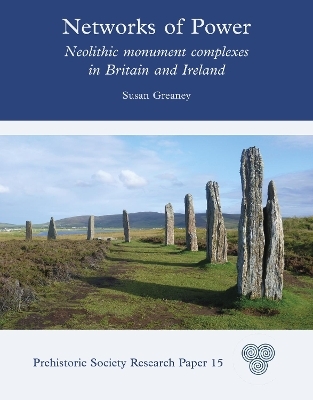
Networks of Power
Neolithic Monument Complexes in Britain and Ireland
Seiten
2026
Casemate Publishers (Verlag)
979-8-88857-188-0 (ISBN)
Casemate Publishers (Verlag)
979-8-88857-188-0 (ISBN)
- Titel nicht im Sortiment
- Artikel merken
Sets out a new approach to the circulation of power in Neolithic societies, through an exploration of ceremonial monument complexes, where relations of power were negotiated, between people and the physical world they lived in (geology, landscapes, watercourses, celestial bodies), as well as between the past and the future.
In the Neolithic period across Britain and Ireland a number of unusually dense concentrations of ceremonial monuments emerged and developed. These monument complexes share strikingly similar patterns of activity and common architectural types, and acted as nodal points in networks of shared ideas and circulating objects. This major synthesis examines the phenomena of monument complexes by exploring five key examples, Stenness-Brodgar in Orkney, Brú na Bóinne in Co. Meath, Ireland, Avebury and Stonehenge, both in Wiltshire, and Dorchester in Dorset. Why did complexes emerge in these locations? What was the trajectory of monument construction and other forms of activity? How do the chronologies and spatial organisation of these complexes compare?
Monuments built of earth, timber and stone provide important evidence for social organisation in the Neolithic period. The immense labour and co-operative demands of such projects have been viewed as evidence for the presence of powerful elites and hierarchies. However, direct evidence for social stratification is sparse, either from burials or settlements. This volume adopts a new approach to power, inspired by relational, new materialist and assemblage thinking, to explore how unequal power relations between people were mediated through non-human places and things at monument complexes. In a thematic structure exploring the underworld, surface world and upper world, including topography, geology, watercourses and celestial bodies, are explored. Relations of time are then examined, including the presentation of a detailed narrative for the Dorchester complex, based on new radiocarbon dating. Monument complexes emerge as places where people collaborated and negotiated with each other, through engagement with non-human places and times.
In the Neolithic period across Britain and Ireland a number of unusually dense concentrations of ceremonial monuments emerged and developed. These monument complexes share strikingly similar patterns of activity and common architectural types, and acted as nodal points in networks of shared ideas and circulating objects. This major synthesis examines the phenomena of monument complexes by exploring five key examples, Stenness-Brodgar in Orkney, Brú na Bóinne in Co. Meath, Ireland, Avebury and Stonehenge, both in Wiltshire, and Dorchester in Dorset. Why did complexes emerge in these locations? What was the trajectory of monument construction and other forms of activity? How do the chronologies and spatial organisation of these complexes compare?
Monuments built of earth, timber and stone provide important evidence for social organisation in the Neolithic period. The immense labour and co-operative demands of such projects have been viewed as evidence for the presence of powerful elites and hierarchies. However, direct evidence for social stratification is sparse, either from burials or settlements. This volume adopts a new approach to power, inspired by relational, new materialist and assemblage thinking, to explore how unequal power relations between people were mediated through non-human places and things at monument complexes. In a thematic structure exploring the underworld, surface world and upper world, including topography, geology, watercourses and celestial bodies, are explored. Relations of time are then examined, including the presentation of a detailed narrative for the Dorchester complex, based on new radiocarbon dating. Monument complexes emerge as places where people collaborated and negotiated with each other, through engagement with non-human places and times.
Susan Greaney is a lecturer in archaeology at the University of Exeter, where she teaches a range of topics including prehistoric Europe, heritage, museums, and archaeological theory. Her research focuses on monuments, landscapes, and societies of Neolithic and Early Bronze Age Britain and Ireland, with a particular interest in radiocarbon chronologies and social inequalities.
Introduction
1. Monument complexes in time and place
2. Investigating social relations in the Neolithic
3. Place: the underworld
4. Place: the surface world
5. Place: the upper world
6. Time
7. Discussion
Conclusion
Appendix – date tables for the five monument complexes
| Erscheinungsdatum | 21.10.2025 |
|---|---|
| Zusatzinfo | 100 colour and B/W illustrations |
| Sprache | englisch |
| Maße | 216 x 280 mm |
| Themenwelt | Geisteswissenschaften ► Archäologie |
| Geschichte ► Allgemeine Geschichte ► Vor- und Frühgeschichte | |
| Geisteswissenschaften ► Geschichte ► Regional- / Ländergeschichte | |
| ISBN-13 | 979-8-88857-188-0 / 9798888571880 |
| Zustand | Neuware |
| Informationen gemäß Produktsicherheitsverordnung (GPSR) | |
| Haben Sie eine Frage zum Produkt? |
Mehr entdecken
aus dem Bereich
aus dem Bereich
auf den Spuren der frühen Zivilisationen
Buch | Hardcover (2023)
C.H.Beck (Verlag)
CHF 27,95
Erkennen. Bestimmen. Beschreiben
Buch | Softcover (2022)
Deutscher Kunstverlag
CHF 27,85


