


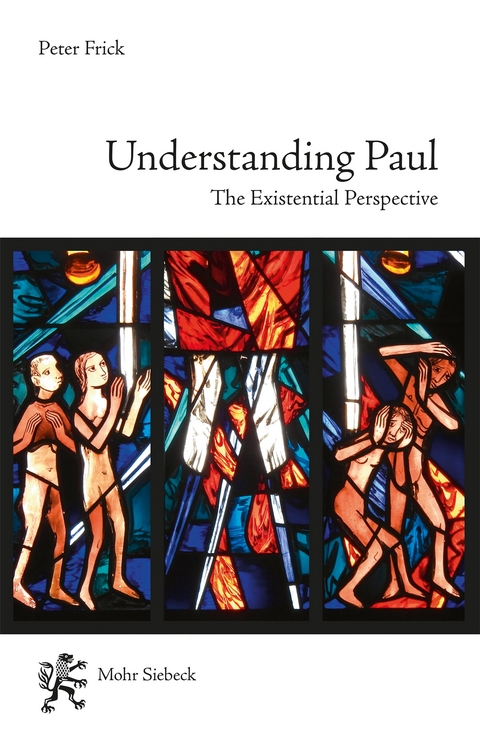
Understanding Paul
The Existential Perspective
Seiten
Peter Frick argumentiert, dass das zentrale Thema, mit dem der Apostel Paulus den Tod und die Auferstehung Jesu Christi in Verbindung bringt, die Macht der Sünde ist. Die Sünde (Singular) ist eine ontologisch-existenziale Kategorie und unterscheidet sich von den Sünden (Plural). Damit der Tod Jesu bei der Überwindung der Macht der Sünde wirksam werden kann, muss die Erlösung strikt in der neuen Ontologie der Auferstehung Jesu begründet sein.
Peter Frick argues hermeneutically that the key issue to which the apostle Paul correlates the death and resurrection of Jesus Christ is the power of sin. Understood in the tradition of Heidegger, sin (singular) is an ontological-existential category and distinct from sins (plural). For the death of Jesus to be effective in overcoming the death sentence of the power of sin, salvation is established strictly in the resurrection of Jesus. The correlation between plight and solution lies on the ontological level. Just as sin is an ontological structure unto death, so the resurrection provides a new ontological structure towards life. In the resurrection, death itself died. If so, an ontological foundation of salvation raises the question of the meaning of Jesus' life, suffering, and violent death. The questions discussed in the second part of the book include the significance of Christ/Messiah vis-à-vis sin, sins, and Torah, how faith is related to salvation, how a Christian ethic must be conceived on the basis of an ontological understanding of sin, and what life in view of a new creation might look like. These questions will be examined from an existential perspective in view of our contemporary existence.
Peter Frick argues hermeneutically that the key issue to which the apostle Paul correlates the death and resurrection of Jesus Christ is the power of sin. Understood in the tradition of Heidegger, sin (singular) is an ontological-existential category and distinct from sins (plural). For the death of Jesus to be effective in overcoming the death sentence of the power of sin, salvation is established strictly in the resurrection of Jesus. The correlation between plight and solution lies on the ontological level. Just as sin is an ontological structure unto death, so the resurrection provides a new ontological structure towards life. In the resurrection, death itself died. If so, an ontological foundation of salvation raises the question of the meaning of Jesus' life, suffering, and violent death. The questions discussed in the second part of the book include the significance of Christ/Messiah vis-à-vis sin, sins, and Torah, how faith is related to salvation, how a Christian ethic must be conceived on the basis of an ontological understanding of sin, and what life in view of a new creation might look like. These questions will be examined from an existential perspective in view of our contemporary existence.
Born 1961; former Academic Dean and current Professor of Religious Studies at United College (formerly St. Paul's University College) at the University of Waterloo, Canada.
| Erscheinungsdatum | 23.09.2023 |
|---|---|
| Verlagsort | Tübingen |
| Sprache | englisch |
| Maße | 146 x 226 mm |
| Gewicht | 511 g |
| Themenwelt | Religion / Theologie ► Christentum ► Bibelausgaben / Bibelkommentare |
| Schlagworte | Apostle Paul • Atonement in Paul • Ethics in Paul • Paul and hermeneutics • Paul and ontology • Pauline theology |
| ISBN-10 | 3-16-162629-X / 316162629X |
| ISBN-13 | 978-3-16-162629-6 / 9783161626296 |
| Zustand | Neuware |
| Informationen gemäß Produktsicherheitsverordnung (GPSR) | |
| Haben Sie eine Frage zum Produkt? |
Mehr entdecken
aus dem Bereich


aus dem Bereich
Buch | Softcover (2021)
De Gruyter (Verlag)
CHF 44,90
die Weihnachtsbotschaft – entstaubt, durchgelüftet, neuentdeckt
Buch | Hardcover (2024)
Verlag Herder
CHF 28,90


