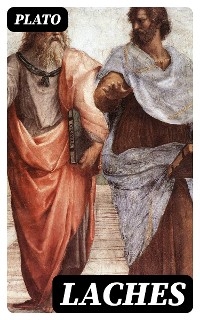
Plato (circa 427-347 BCE) stands among the towering figures in Western philosophy, whose contributions have profoundly influenced intellectual traditions. Born into an aristocratic Athenian family, Plato was a student of Socrates and became the teacher of Aristotle, forming a classical trio that laid the foundations for Western philosophical thought. Plato's works are predominantly written in the form of dialogues, where he explores a wide range of topics including justice, beauty, equality, and the nature of reality and existence. A prolific writer, one of his significant yet shorter works, 'Laches,' delves into the nature of courage. This dialogue presents a nuanced exploration of martial and moral bravery through a conversation between Socrates and two generals, Laches and Nicias. The text is illustrative of Plato's dialectical method and Socratic irony, which became hallmarks of his literary style. The profound nature of Plato's dialogues encapsulate his philosophical investigations, leading the reader through rigorous reasoning and questioning. His academy, one of the earliest institutions of higher learning in the Western world, served as a crucible for intellectual development long after his death. Plato's enduring legacy is embedded in his vision of the ideal state, theory of forms, and the epistemological inquiries that have engaged scholars and students for centuries.
| Erscheint lt. Verlag | 15.9.2022 |
|---|---|
| Übersetzer | Benjamin Jowett |
| Verlagsort | Prague |
| Sprache | englisch |
| Themenwelt | Literatur |
| Geisteswissenschaften ► Philosophie | |
| Schlagworte | 470 BC-399 BC • Ancient Greek philosophy • Ancient wisdom literature • Athenian society • classical Athens texts • Classical literature • Classical Philology • Courage • Courage and wisdom • Courage examination • Early works to 1800 • educational philosophy treatise • Ethical Inquiry • ethical philosophy • Ethics and virtue • Historical philosophical text • Human excellence discourse • intellectual inquiry journey • Laches courage theme • Moral reasoning exploration • Peloponnesian War context • philosophical discourse • Philosophy general • plato dialogues • Platonic works • Plato's Dialogues • Plato's philosophical legacy • Socrates • Socratic dialogue • Socratic dialogue tradition • Socratic method • Socratic method literature • virtue ethics books • Virtue exploration • Western philosophy classics |
| Informationen gemäß Produktsicherheitsverordnung (GPSR) | |
| Haben Sie eine Frage zum Produkt? |
 EPUB (Wasserzeichen)
DRM: Digitales Wasserzeichen
Dieses eBook enthält ein digitales Wasserzeichen und ist damit für Sie personalisiert. Bei einer missbräuchlichen Weitergabe des eBooks an Dritte ist eine Rückverfolgung an die Quelle möglich.
Dateiformat: EPUB (Electronic Publication)
EPUB ist ein offener Standard für eBooks und eignet sich besonders zur Darstellung von Belletristik und Sachbüchern. Der Fließtext wird dynamisch an die Display- und Schriftgröße angepasst. Auch für mobile Lesegeräte ist EPUB daher gut geeignet.
Systemvoraussetzungen:
PC/Mac: Mit einem PC oder Mac können Sie dieses eBook lesen. Sie benötigen dafür die kostenlose Software Adobe Digital Editions.
eReader: Dieses eBook kann mit (fast) allen eBook-Readern gelesen werden. Mit dem amazon-Kindle ist es aber nicht kompatibel.
Smartphone/Tablet: Egal ob Apple oder Android, dieses eBook können Sie lesen. Sie benötigen dafür eine kostenlose App.
Geräteliste und zusätzliche Hinweise
Buying eBooks from abroad
For tax law reasons we can sell eBooks just within Germany and Switzerland. Regrettably we cannot fulfill eBook-orders from other countries.
aus dem Bereich