Nanotechnology (eBook)
308 Seiten
Rowman & Littlefield International (Verlag)
978-1-78660-894-9 (ISBN)
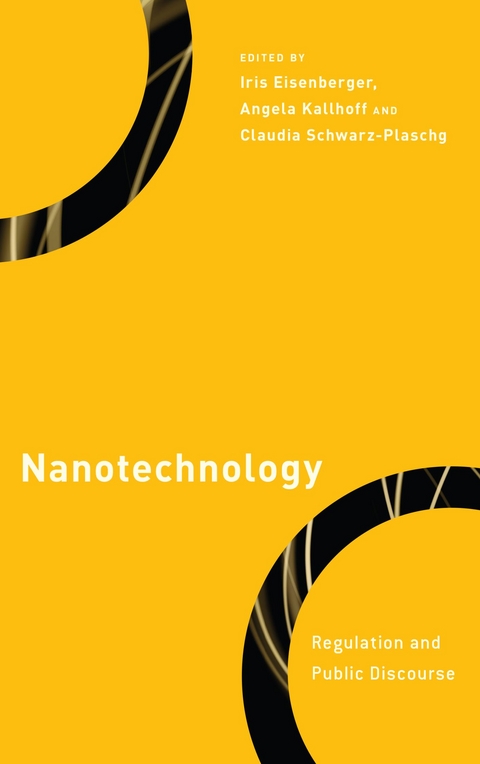
Over the last decades, nanoscience and nanotechnology has been ascribed the potential to contribute beneficial applications in fields such as medicine, cosmetics, or environmental remediation. At the same time it is still contested whether engineered nanomaterials might be not one-sidedly "e;good"e; but may also entail negative side-effects for human health and the environment. To address this uncertainty, academic and political initiatives have sought to establish norms and practices to assess and govern nanomaterials. Rooted in different disciplines such as ethics, ecology, law, social and political sciences, the chapters in this edited volume explore the normative approaches, societal practices, and legal mechanisms which have emerged in the nano-field over the last two decades. The chapters also present a broad variety of evaluative approaches that may assist societal actors in their attempts to actively shape and contribute to the debate about nanomaterials.
lt;span>Iris Eisenberger is Professor at and Head of the Institute of Law at the University of Natural Resources and Life Sciences in Vienna, Austria. Her research focuses on law and innovation, environmental law and research law as well as the didactics of law.
Angelika Kallhoff is a Professor of Ethics with special emphasis on Applied Ethics at the University of Vienna’s Department of Philosophy and the director of the Research Platform Nano-Norms-Nature. Her research interests are in the area of ethics, applied ethics, and political philosophy.
Claudia Schwarz-Plaschg is University Assistant (post doc) at the Research Platform Nano-Norms-Nature at the University of Vienna. Her research explores the co-shaping of emerging technosciences and society with a specific focus on the area of nanotechnology.
List of Figures and Tables
Preface
1.Rethinking Ethical, Legal, and Societal Frameworks for Assessing and Governing Nanomaterials
Angela Kallhoff, Claudia Schwarz-Plaschg, and Elias Moser
Part I: Evaluation and Standardisation
2.Ecocentric Evaluation of Nano-release
Risk, Precaution and Imagination
Angela Kallhoff and Elias Moser
3.Standardising Responsibility?
The Significance of Interstitial Spaces
Fern Wickson and Ellen-Marie Forsberg (reprint)
4.Standardisation and Patenting in Nanotechnology
Better Balancing for a Necessary Nuisance
Thomas Jaeger
5.Standardisation
Enabler for Nanotechnology Innovation
Henk de Vries
Part II: Norms and Regulation
6.Science – Democracy – Industry
Who is in Charge of Regulating Nanomaterials?
Diana M. Bowman and Lucille M. Tournas
7.Pros and Cons of Nano-Regulation and Ways towards a Sustainable use
Juliane Filser
8.Nanotechnology and Fundamental Rights
How to Regulate Dual Use Research?
Iris Eisenberger and Franziska Bereuter
9.Monitoring the Value of Responsible Research and Innovation in Industrial Nanotechnology Innovation Projects
Emad Yaghmaei, Andrea Porcari, Elivio Mantovani,
and Steven M. Flipse
Part III: Politics and Publics
10.The Politics and Public Imagination of Nano-Labelling in Europe
Claudia Schwarz-Plaschg
11.Emerging Technologies and the Problem of Representation
Lotte Krabbenborg
12.Nanotechnology
Democratising a Hyped-up Technology?
Franz Seifert
References
Index
Contributors
| Reihe/Serie | Philosophy, Technology and Society | Philosophy, Technology, and Society |
|---|---|
| Zusatzinfo | 20 Illustrations including: - 8 Black & White Illustrations; - 8 Tables; - 4 Text Boxes. |
| Verlagsort | London |
| Sprache | englisch |
| Themenwelt | Geisteswissenschaften ► Philosophie ► Allgemeines / Lexika |
| Geisteswissenschaften ► Philosophie ► Ethik | |
| Schlagworte | Economics • Engineering • ethics • Law • nanomaterials • nanotechnology • Philosophy of Technology • Science |
| ISBN-10 | 1-78660-894-4 / 1786608944 |
| ISBN-13 | 978-1-78660-894-9 / 9781786608949 |
| Informationen gemäß Produktsicherheitsverordnung (GPSR) | |
| Haben Sie eine Frage zum Produkt? |
 EPUB (Adobe DRM)
Kopierschutz: Adobe-DRM
Adobe-DRM ist ein Kopierschutz, der das eBook vor Mißbrauch schützen soll. Dabei wird das eBook bereits beim Download auf Ihre persönliche Adobe-ID autorisiert. Lesen können Sie das eBook dann nur auf den Geräten, welche ebenfalls auf Ihre Adobe-ID registriert sind.
Details zum Adobe-DRM
Dateiformat: EPUB (Electronic Publication)
EPUB ist ein offener Standard für eBooks und eignet sich besonders zur Darstellung von Belletristik und Sachbüchern. Der Fließtext wird dynamisch an die Display- und Schriftgröße angepasst. Auch für mobile Lesegeräte ist EPUB daher gut geeignet.
Systemvoraussetzungen:
PC/Mac: Mit einem PC oder Mac können Sie dieses eBook lesen. Sie benötigen eine
eReader: Dieses eBook kann mit (fast) allen eBook-Readern gelesen werden. Mit dem amazon-Kindle ist es aber nicht kompatibel.
Smartphone/Tablet: Egal ob Apple oder Android, dieses eBook können Sie lesen. Sie benötigen eine
Geräteliste und zusätzliche Hinweise
Buying eBooks from abroad
For tax law reasons we can sell eBooks just within Germany and Switzerland. Regrettably we cannot fulfill eBook-orders from other countries.
aus dem Bereich