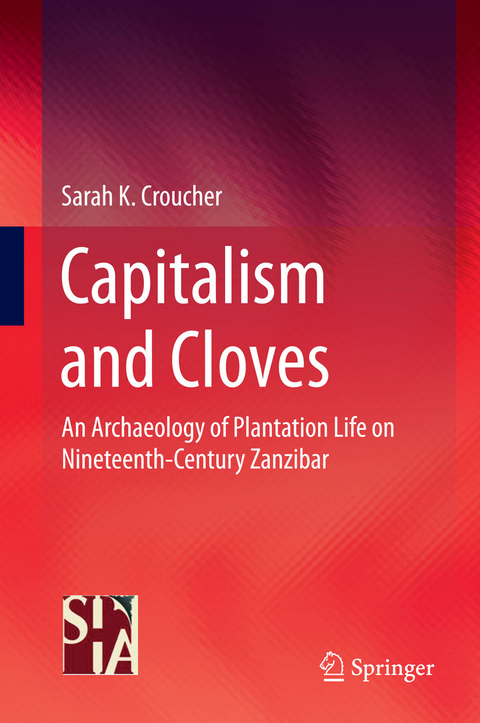
Capitalism and Cloves (eBook)
XIII, 256 Seiten
Springer New York (Verlag)
978-1-4419-8471-5 (ISBN)
This study of nineteenth-century clove plantations on Zanzibar provides an important contribution to debates in global historical archaeology. Broadening plantation archaeology beyond the Atlantic World, this work addresses plantations run by Omani Arab colonial rulers of Zanzibar. Drawing on archaeological and historical data, this book argues for the need to examine non-Western contexts of colonialism and capitalism as coeval with those in the North Atlantic World. This work explores themes of capitalism, colonialism, plantation landscapes, African Diaspora communities, gender and sexuality, locally produced and imported goods in historic contexts, and Islamic historical archaeology.
Sarah K. Croucher is an Assistant Professor of Anthropology, Archaeology, and Feminist, Gender & Sexuality Studies at Wesleyan University. Her research broadly explores nineteenth-century African Diaspora contexts, largely through the study of East Africa. She is interested in questions of identity and power, and theoretical debates in historical archaeology. Her current research is based in Middletown, Connecticut, where she directs a community archaeology project examining the Beman Triangle, a mid-nineteenth century free African American community associated with the AME Zion Church where she is examining racialized, gendered, and community identities in relation to the neighborhood landscape.
This study of nineteenth-century clove plantations on Zanzibar provides an important contribution to debates in global historical archaeology. Broadening plantation archaeology beyond the Atlantic World, this work addresses plantations run by Omani Arab colonial rulers of Zanzibar. Drawing on archaeological and historical data, this book argues for the need to examine non-Western contexts of colonialism and capitalism as coeval with those in the North Atlantic World. This work explores themes of capitalism, colonialism, plantation landscapes, African Diaspora communities, gender and sexuality, locally produced and imported goods in historic contexts, and Islamic historical archaeology.
Sarah K. Croucher is an Assistant Professor of Anthropology, Archaeology, and Feminist, Gender & Sexuality Studies at Wesleyan University. Her research broadly explores nineteenth-century African Diaspora contexts, largely through the study of East Africa. She is interested in questions of identity and power, and theoretical debates in historical archaeology. Her current research is based in Middletown, Connecticut, where she directs a community archaeology project examining the Beman Triangle, a mid-nineteenth century free African American community associated with the AME Zion Church where she is examining racialized, gendered, and community identities in relation to the neighborhood landscape.
Chapter 1: Introduction.- Chapter 2: Why Clove Plantations? East African Archaeology, History and Anthropology.- Chapter 3: Plantation Landscapes.- Chapter 4: The Archaeology of Slavery.- Chapter 5: Plantation Households.- Chapter 6: Global Goods.- Chapter 7: Pemban People: Local Ceramics and Changing Identities.- Chapter 8: Capitalism and Cloves: East African Historical Archaeology.
| Erscheint lt. Verlag | 29.10.2014 |
|---|---|
| Zusatzinfo | XIII, 256 p. 29 illus., 11 illus. in color. |
| Verlagsort | New York |
| Sprache | englisch |
| Themenwelt | Geisteswissenschaften ► Archäologie |
| Geschichte ► Allgemeine Geschichte ► Altertum / Antike | |
| Geschichte ► Allgemeine Geschichte ► Neuzeit (bis 1918) | |
| Geisteswissenschaften ► Geschichte ► Regional- / Ländergeschichte | |
| Schlagworte | African diaspora • Arabic history • Colonialism • Historical Archaeology • Plantation Studies |
| ISBN-10 | 1-4419-8471-2 / 1441984712 |
| ISBN-13 | 978-1-4419-8471-5 / 9781441984715 |
| Informationen gemäß Produktsicherheitsverordnung (GPSR) | |
| Haben Sie eine Frage zum Produkt? |
 PDF (Wasserzeichen)
DRM: Digitales Wasserzeichen
Dieses eBook enthält ein digitales Wasserzeichen und ist damit für Sie personalisiert. Bei einer missbräuchlichen Weitergabe des eBooks an Dritte ist eine Rückverfolgung an die Quelle möglich.
Dateiformat: PDF (Portable Document Format)
Mit einem festen Seitenlayout eignet sich die PDF besonders für Fachbücher mit Spalten, Tabellen und Abbildungen. Eine PDF kann auf fast allen Geräten angezeigt werden, ist aber für kleine Displays (Smartphone, eReader) nur eingeschränkt geeignet.
Systemvoraussetzungen:
PC/Mac: Mit einem PC oder Mac können Sie dieses eBook lesen. Sie benötigen dafür einen PDF-Viewer - z.B. den Adobe Reader oder Adobe Digital Editions.
eReader: Dieses eBook kann mit (fast) allen eBook-Readern gelesen werden. Mit dem amazon-Kindle ist es aber nicht kompatibel.
Smartphone/Tablet: Egal ob Apple oder Android, dieses eBook können Sie lesen. Sie benötigen dafür einen PDF-Viewer - z.B. die kostenlose Adobe Digital Editions-App.
Buying eBooks from abroad
For tax law reasons we can sell eBooks just within Germany and Switzerland. Regrettably we cannot fulfill eBook-orders from other countries.
aus dem Bereich